ESG, short for Environmental, Social, and Governance, has moved from a voluntary talking point to a regulatory expectation across the Gulf. Companies listed on GCC exchanges increasingly face sustainability disclosure requirements, and frameworks like the Abu Dhabi Global Market's whistleblower regime have pushed transparency further up the agenda for entities operating in the region.
Most of the conversation around ESG in MENA focuses on the "E," carbon targets, green finance, net zero commitments. Less attention goes to the "G," and esg governance is exactly where investors increasingly look for proof, not intentions.
The Governance Indicator That Gets Overlooked
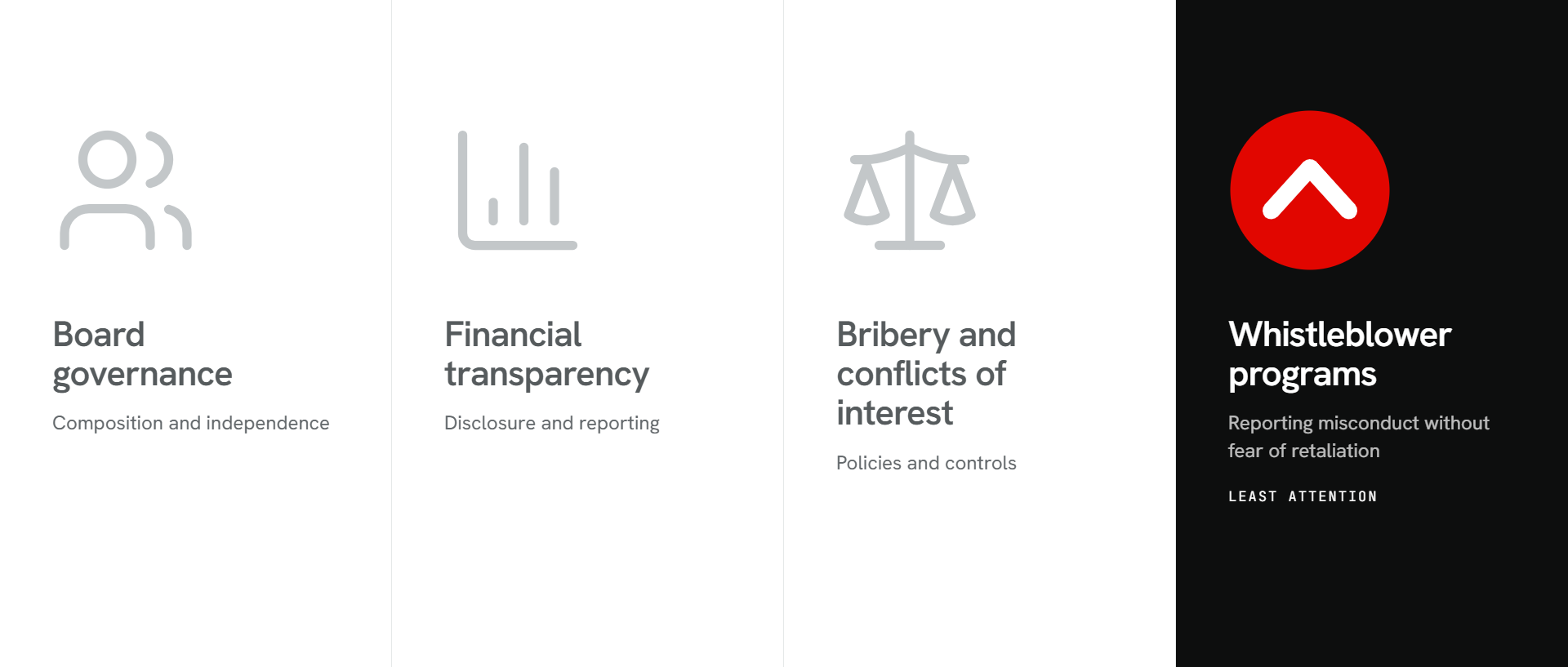
Corporate governance frameworks, and the ESG standards used to evaluate them, consistently name the same handful of concrete indicators: board governance, meaning board composition and independence, financial transparency, policies on bribery and conflicts of interest, and whistleblower programs that let employees and stakeholders report misconduct without fear of retaliation.
That last one tends to get the least attention, and it may be the most telling. A whistleblowing mechanism is one of the few governance indicators that shows whether an organization's stated values actually function day to day. A code of conduct is a document. A reporting channel is a test of whether that document means anything.
Why This Matters More in the Gulf Right Now
Several developments are converging at once.
Regulatory frameworks are catching up.
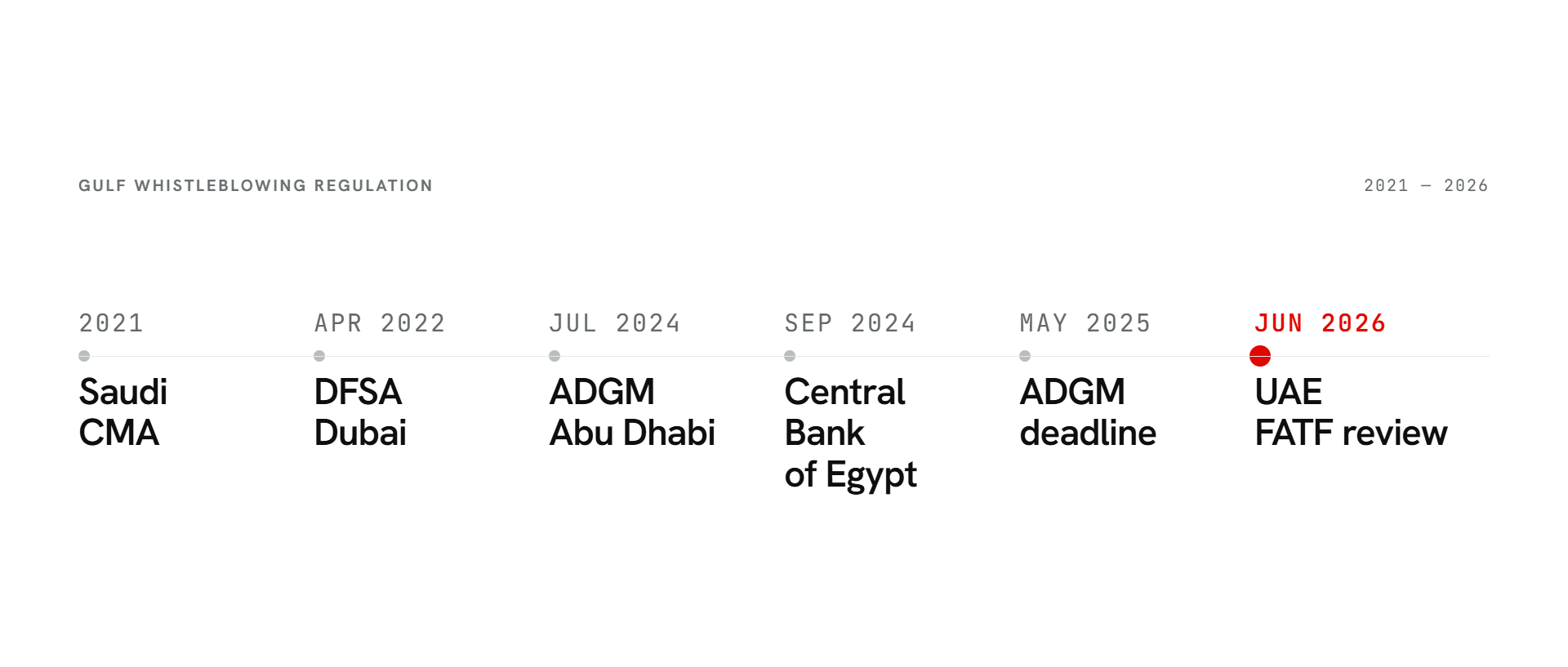
The UAE's free zones already require regulated entities to run formal whistleblower protection arrangements. ADGM's Whistleblower Protection Regulations 2024, in force since July 5, 2024 with a compliance deadline of May 31, 2025, and the DFSA's whistleblowing framework, effective since April 2022, are both covered in more depth elsewhere on this blog .
What's newer is Egypt. In September 2024, the Central Bank of Egypt issued a Governance and Internal Controls for Banks circular , reinforcing internal oversight expectations across the banking sector. Across the region, whistleblowing infrastructure is moving from best practice toward formal expectation for regulated entities.
ESG disclosure expectations are tightening.
Saudi Arabia's Capital Market Authority has required companies listed on Tadawul to report on violations of capital market law since 2021, and governance guidance for listed companies increasingly points to documented anti corruption programs , including whistleblower mechanisms, as part of what strong governance looks like. As GCC exchanges continue shifting from voluntary guidelines toward firmer requirements, companies will need to substantiate governance claims with real mechanisms, not policy documents alone.
International scrutiny is rising.
The UAE is due for a Financial Action Task Force (FATF) mutual evaluation in June 2026, a milestone covered in more detail in our 2026 UAE whistleblowing compliance briefing . Legal analysts tracking the review have noted that the UAE's recent whistleblowing developments are likely to factor into how the country's broader commitment to financial crime prevention gets assessed. Governance infrastructure is no longer just an internal matter. It's part of how the region's markets are evaluated externally.
What This Means in Practice
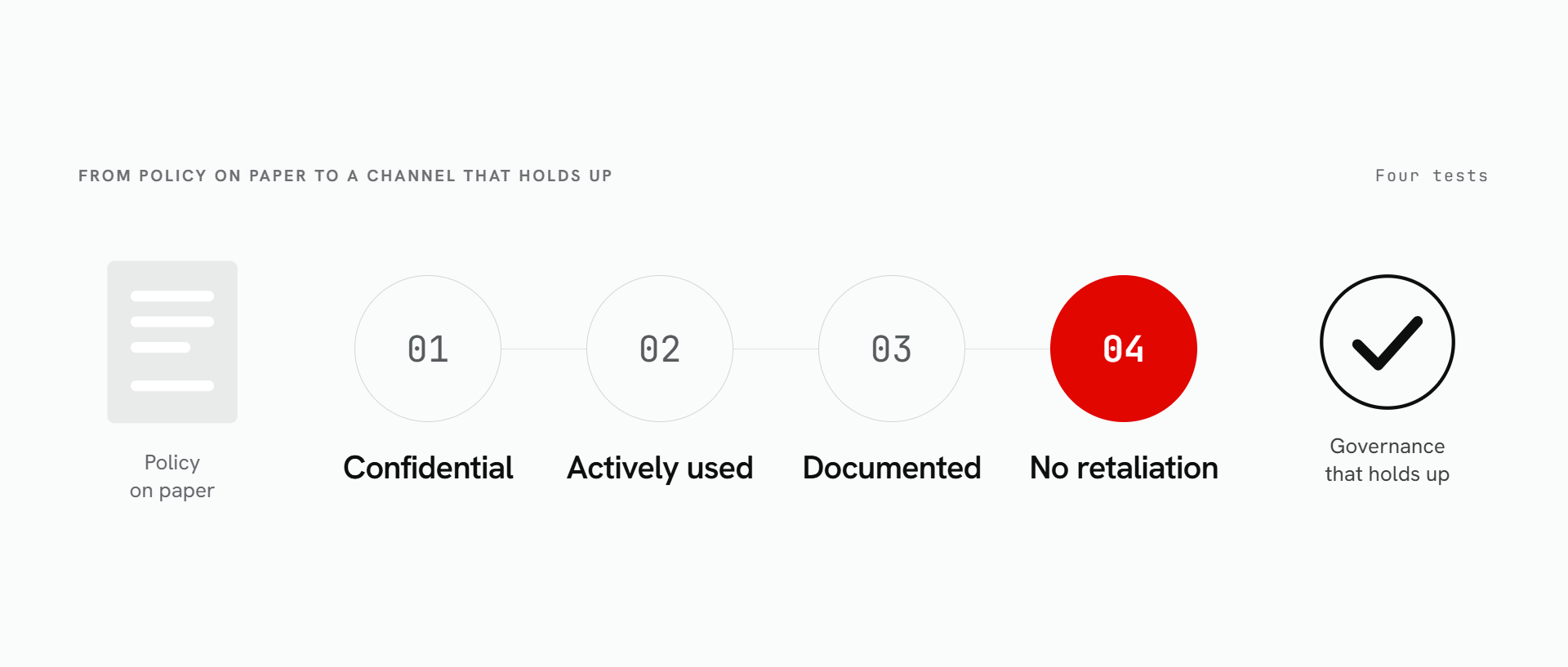
For a company preparing an ESG report, or preparing to be evaluated on one, the presence of a whistleblowing channel is a start. What gets scrutinized more closely is whether that channel is:
- Genuinely confidential, not just described as such
- Actively used, not sitting unused since it was launched
- Backed by a documented process, so a report doesn’t disappear after it’s filed
- Free of retaliation, in practice, not just on paper
These are the same questions a regulator would ask. Increasingly, they’re the same questions an investor evaluating governance will ask too.
Turning Governance Into a Working System
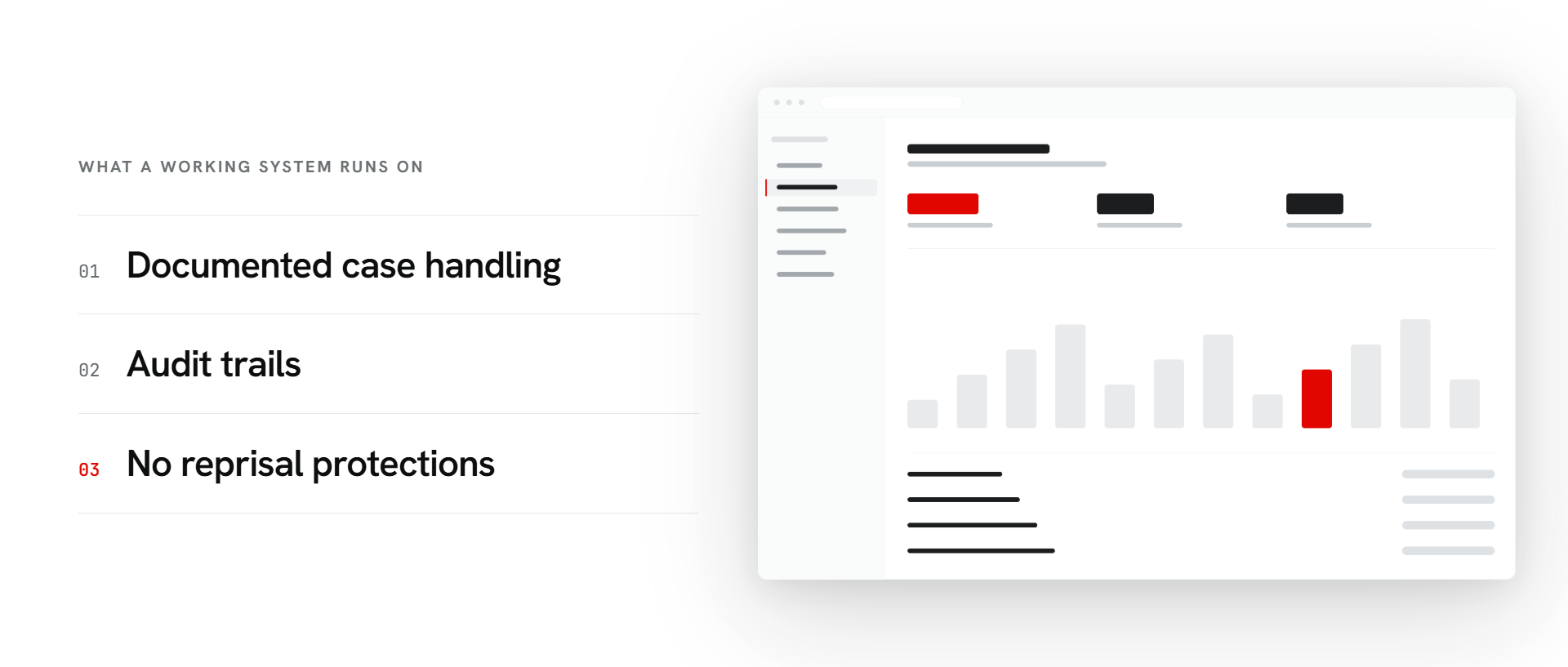
Meeting these standards requires a reporting channel rather than a policy template, one that's actually confidential, used, and followed through on, the same qualities regulators and investors are learning to check for directly.
iVoiceUp gives organizations that infrastructure: a real, working whistleblowing infrastructure with documented case handling, audit trails, and no reprisal protections built in from the start. iVoiceUp doesn't act as a substitute for regulatory compliance, instead, it provides the internal mechanism that makes real compliance and governance possible to demonstrate.
The Bottom Line
Governance used to be the quiet pillar of ESG, harder to quantify than emissions data, less visible than social initiatives. That's changing. As regulatory expectations tighten across the UAE, Saudi Arabia, and Egypt, and as international bodies like FATF weigh in on the region's progress, a real, working whistleblowing infrastructure is becoming one of the clearest signals of whether an organization's governance is substance or paperwork.
See how iVoiceUp turns ESG governance commitments into a working system. Request a demo.
Sources referenced in this piece
- ADGM Whistleblower Protection Regulations 2024, in force July 5, 2024, compliance deadline May 31, 2025 ( ADGM.com , DLA Piper, Hogan Lovells, National Law Review)
- DFSA Whistleblowing Regime, effective April 7, 2022, DIFC Regulatory Law No. 1 of 2004 ( DFSA.ae , Lexology)
- Central Bank of Egypt Governance and Internal Controls for Banks Circular, September 19, 2024
- Saudi Capital Market Authority Regulation on the Reporting of Violations of the Capital Market Law (2021), applicable to Tadawul listed companies
- FATF mutual evaluation of the UAE, scheduled June 2026 (Herbert Smith Freehills Kramer)