Egypt's whistleblowing and compliance landscape today is a mix of voluntary guidance, legislation moving into active implementation, and genuinely new binding requirements, existing side by side. But looking at how that landscape has moved in just the past year, a clear pattern emerges: expectations that were loosely defined or unenforced are steadily becoming specific, operational, and in some cases mandatory, sector by sector, deadline by deadline. For organizations still treating whistleblowing infrastructure as a nice to have, that pattern is worth reading carefully, because it points toward where the standard is heading, not just where it stands today.
Where things stand
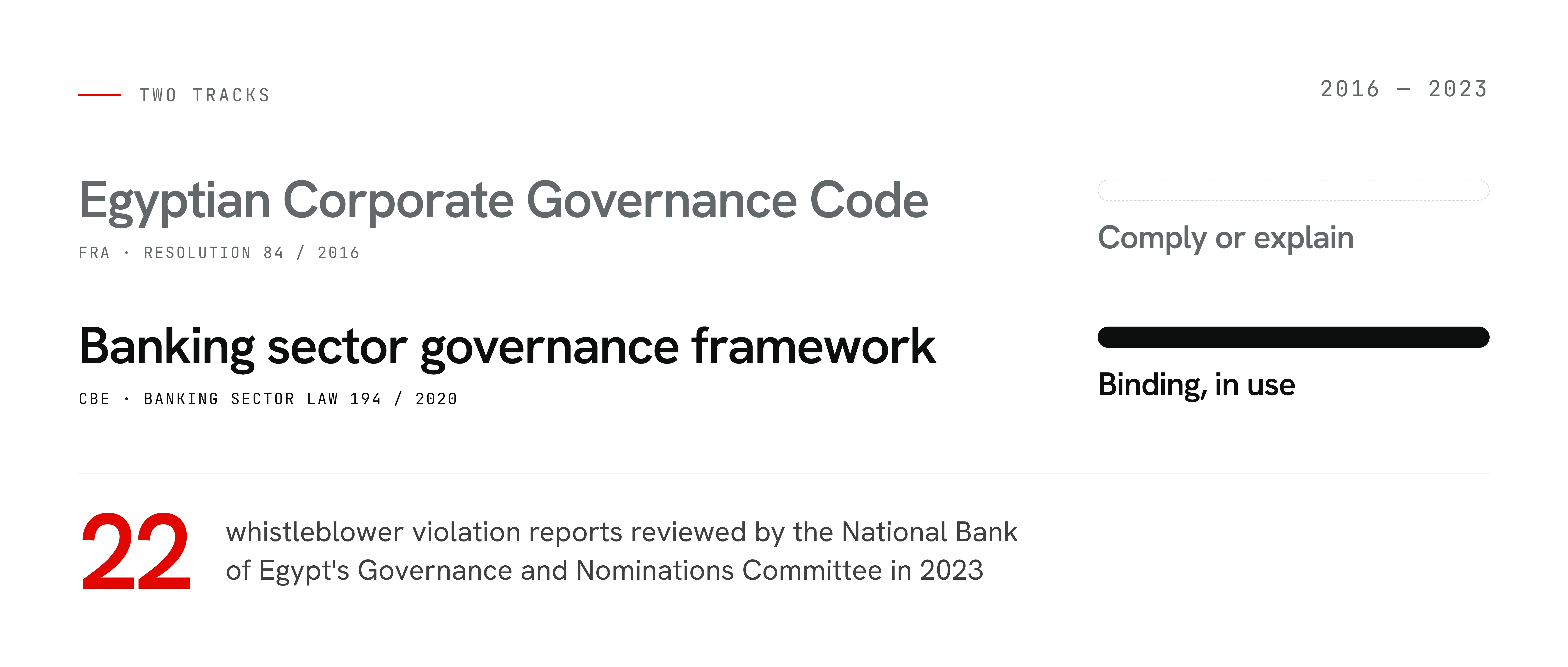
Egypt's foundational governance reference, the Egyptian Corporate Governance Code, Third Release, approved under FRA Board Resolution No. 84 of 26 July 2016, already describes in detail what a proper whistleblowing policy needs, a clear objective, a responsible committee, defined reporting procedures, confidentiality of the whistleblower's identity, protection from retaliation, and formal investigation procedures. But it operates on a comply or explain basis, guidance, not law, which means adoption depends on each company's own judgment rather than a supervisory requirement to comply.
Banking provides a useful contrast, because CBE regulated institutions operate under a separate banking sector governance framework with more explicit supervisory expectations. Governed by the Central Bank of Egypt under Banking Sector Law No. 194 of 2020 , public disclosures from several Egyptian banks show that these mechanisms are being actively used. The National Bank of Egypt's 2023 governance report discloses that its Governance and Nominations Committee reviewed 22 separate whistleblower violation reports that year. Egyptian Gulf Bank, ABK Egypt, CIB, and Arab Bank Egypt all maintain active, disclosed reporting channels. These disclosures illustrate what more formalized governance expectations can look like in practice.
The direction in 2026
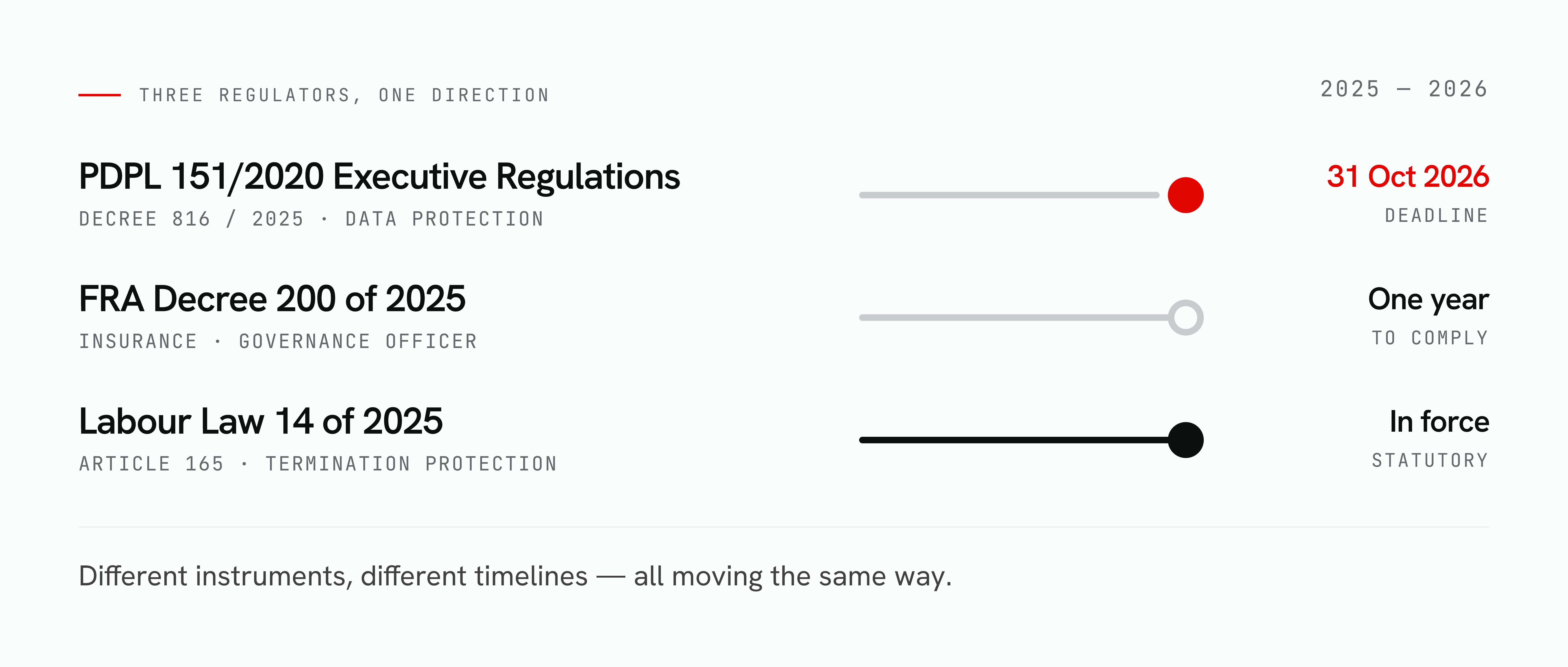
What makes 2026 a meaningful moment isn't any single new rule. It's how many of Egypt's newly created or previously less operational frameworks have moved into active, deadline driven implementation, all within the same short window.
Data protection is the clearest example of a framework moving from legislation into active implementation. Egypt's Personal Data Protection Law (151/2020), commonly known as the PDPL, was legally in force from the start, but sat for five years without the Executive Regulations needed to make it operational. That changed when the Executive Regulations were issued under Ministerial Decree No. 816 of 2025. Whistleblowing and reporting systems can also fall within this framework where they process personal data, with relevant data users required to notify Egypt's Personal Data Protection Center within 72 hours of a breach, and affected individuals within 3 business days after that, with fines up to EGP 5,000,000 and prison terms for the most serious violations. The one year compliance period runs through the end of October 2026, making 31 October 2026 a significant implementation deadline. A law that waited five years for its operating framework is now active, with real deadlines, inside a matter of months.
Insurance shows the same pattern in a different form. FRA Decree No. 200 of 2025 didn't ask insurers to consider adopting a governance framework, it required one, with a governance officer, mandatory conflict of interest disclosure, and a one year compliance deadline, one more sign that corporate governance in Egypt is moving from voluntary guidance to a supervised requirement.
Employment law moved in the same direction. Labour Law No. 14 of 2025 introduced a more explicit statutory protection, Article 165 recognizes filing a complaint or initiating legal action concerning violations of laws, regulations, or employment contracts as an unjustified reason for termination.
Three different domains, three different regulators, and the same underlying shift: Egypt is actively moving from loosely enforced or newly introduced rules toward specific, operational requirements.
What it means for whistleblowing
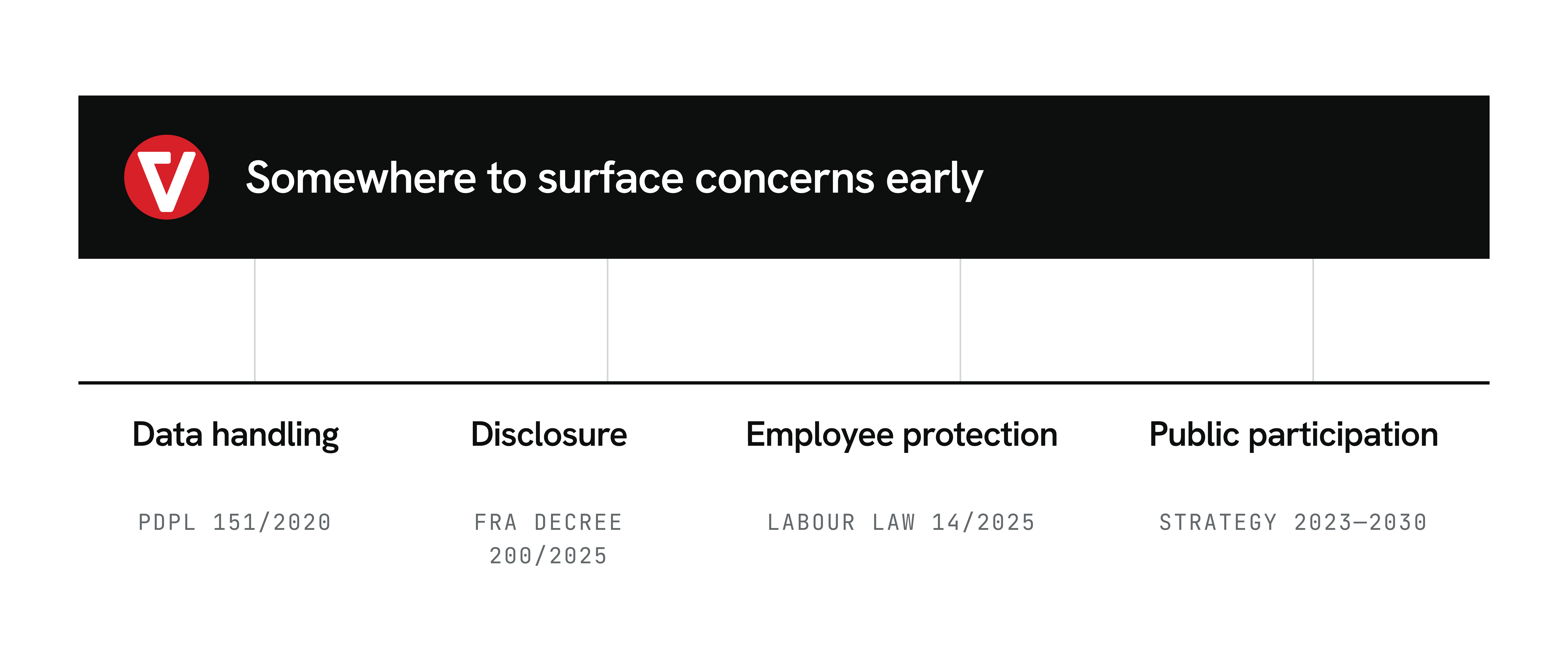
Taken together, these developments point in one direction: organizations need ways to surface potential breaches, conflicts, misconduct, and other concerns before they become larger governance or regulatory issues. That's not yet a general statutory requirement to operate a whistleblowing channel specifically, but it's the clear shape of where compliance expectations are heading. A conflict of interest disclosure requirement, for instance, still depends on someone being willing to flag the conflict in the first place. Egypt's anti corruption strategy, now in its third phase (2023 to 2030), explicitly names public participation and reporting as a core pillar.
Put together, the direction is hard to miss: Egypt's regulators are steadily building the surrounding legal architecture, data handling, disclosure, employee protection, that a real whistleblowing system depends on. The governance code has described the destination since 2016. Developments in 2025 and 2026 have added more specific and operational requirements in several areas.
Why build now
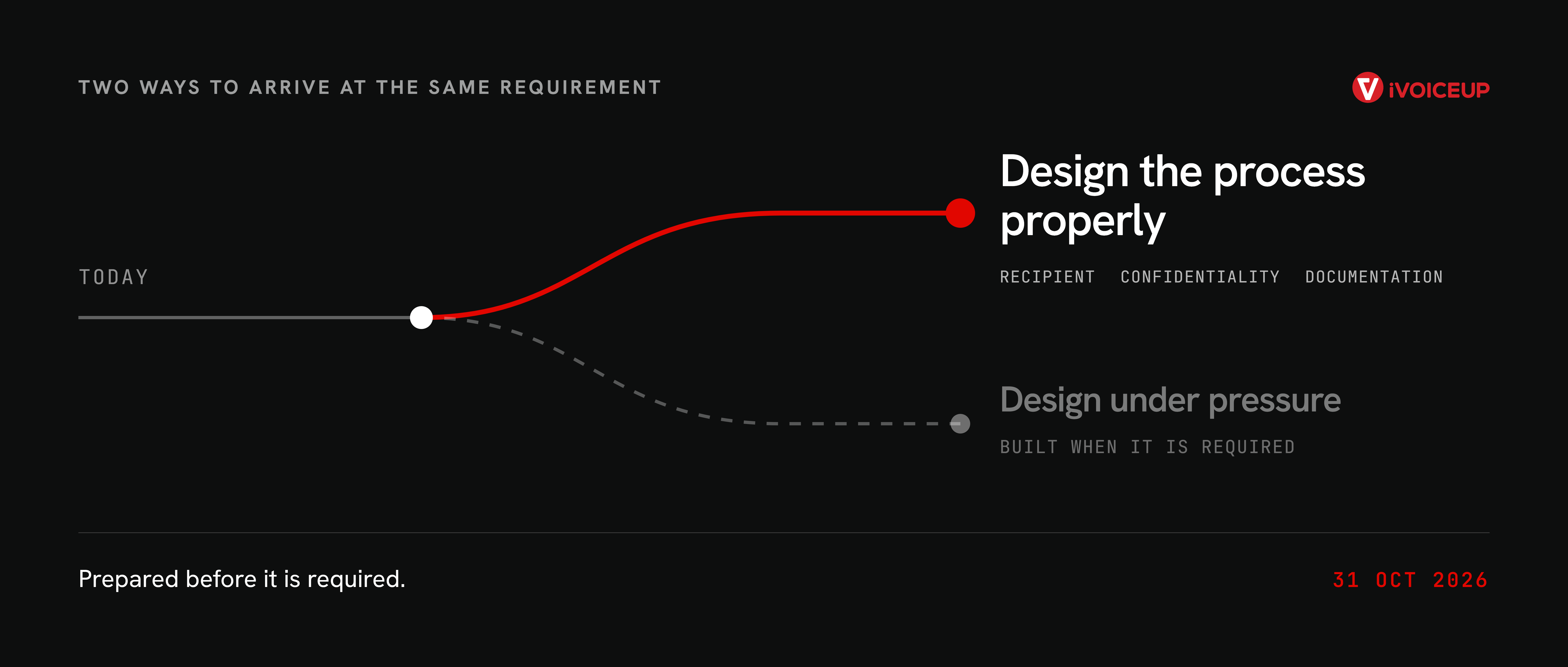
Companies that wait for a mandate before building reporting infrastructure are choosing to design under pressure, retrofitting a system against a compliance deadline that's already landed, often while other new obligations, like PDPL's 31 October 2026 compliance deadline, are landing at the same time. Companies that build it now get to do the opposite, design the process properly, define who receives reports, how confidentiality actually holds, how investigations get documented, before there's a regulator or a deadline forcing the pace.
The direction is clear, compliance expectations are becoming more specific, more operational, and, in some sectors, explicitly mandatory. For organizations, building the infrastructure to receive, protect, investigate, and document concerns before a requirement applies can mean avoiding the need to build it under regulatory pressure.
This is where iVoiceUp comes in. iVoiceUp gives organizations the infrastructure to turn reporting into a structured compliance process , from securely receiving concerns and protecting confidentiality to managing cases and documenting investigations with a clear, timestamped record.
As Egypt's compliance environment continues to evolve, the organizations that are prepared will be the ones that have the right systems in place before they are required to.
Is your reporting infrastructure ready for where this is heading? See how iVoiceUp gets you there.
Disclaimer
This article is provided for general informational purposes and does not constitute legal advice. Regulatory requirements and their application may vary by sector, entity type, and business activity. Organizations should confirm applicable obligations with qualified legal or compliance advisers .