By the iVoiceUp Compliance Team
A quiet workplace can look like trust from the outside. Often, it's something else. Here's why employees mistake silence for loyalty, and what changes when speaking up no longer depends on a relationship.
There's a kind of workplace silence that can feel like trust.
Where working relationships are stable, conflicts remain small, and concerns, when they exist, tend to stay at the edges.
In passing comments. In conversations that get redirected before they become anything formal. From the outside, it can resemble a healthy culture.
Often, it's something else.
When Silence Feels Like the Responsible Choice
Most employees who choose not to report something are not being indifferent. In many cases, they're being considerate.
They think about the colleague they work alongside every day. About how they will be perceived if they say something. About whether the concern is significant enough to justify raising it formally.
And beneath that is a quieter calculation, that speaking up might carry a cost. To a professional relationship. To a sense of belonging. To a reputation built carefully over time.
So they stay quiet, and they frame that choice as the right one. As not making something larger than it needs to be.
What it often reflects, however, is an environment that has never built real psychological safety.
The Gap Between What Is Known and What Gets Raised
This dynamic is difficult to detect from within.
There's rarely a visible sign of suppression. No single moment where someone was told not to speak. Instead, the culture communicates it gradually, through the way previous concerns were handled and what quietly became understood as acceptable to say and what was better left alone.
And so a gap forms.
Between what employees observe and what formally surfaces. Between what circulates in informal conversation and whatever reaches someone with the ability to act on it.
That gap is where risk accumulates. Not suddenly, but gradually. In the concerns that seemed too small to escalate and the signals that were present long before anything became visible.
Loyalty to People Is Not the Same as Loyalty to the Organization
There is a distinction that tends to get lost in cultures like this.
Protecting a colleague from accountability is not the same as protecting the organization.
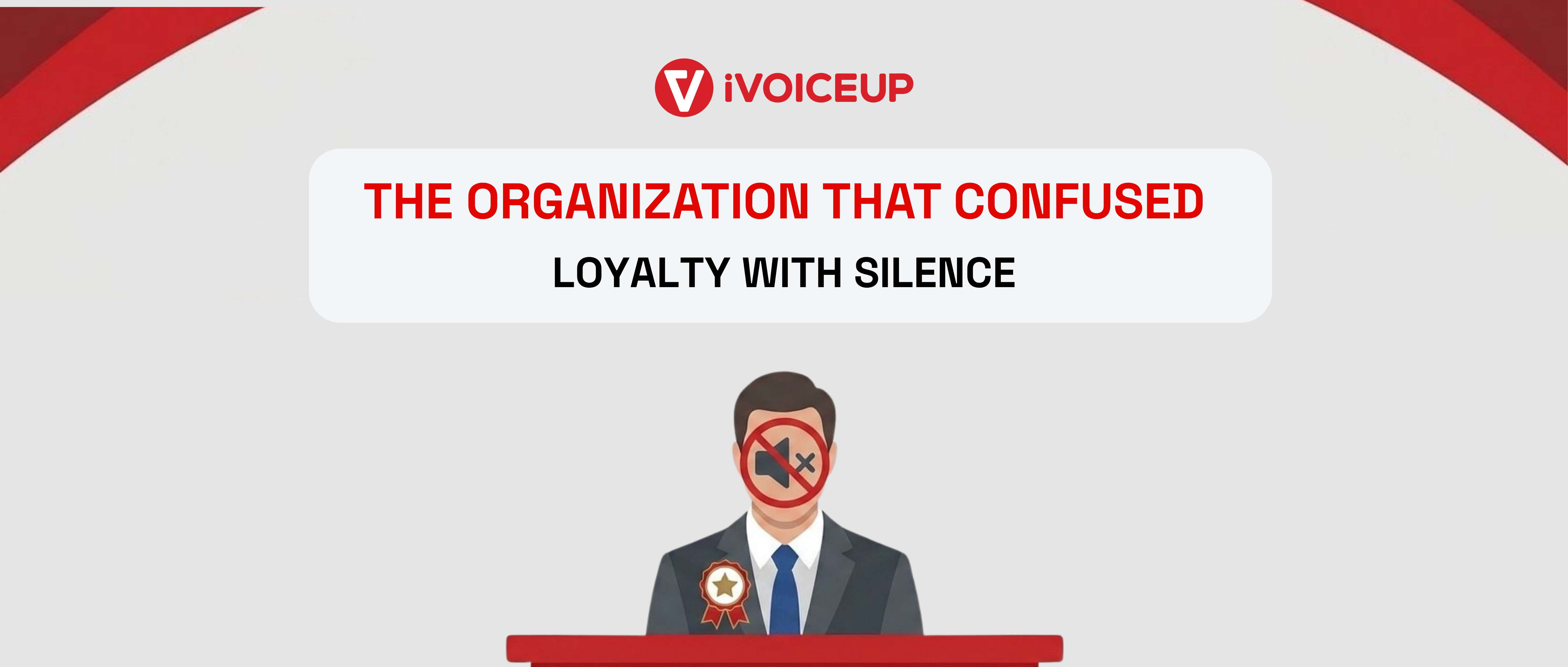
Staying silent about a concern is not the same as preserving trust. And a culture where people feel unable to raise issues without social consequence is not a culture of loyalty, it's a culture of carefully maintained silence.
Genuine loyalty means caring about an organization's long-term integrity. Its ability to identify problems early enough to address them responsibly.
That kind of loyalty sometimes requires saying something uncomfortable.
Which is why the barrier is rarely intention. In most organizations, people are willing to do the right thing when they believe it is genuinely safe to do so.
The barrier is trust. In the process. In what happens after a concern is raised. In whether speaking up will lead to something, or simply create difficulty for the person who chose to say something.
What Changes When the System Holds the Concern
When reporting is anonymous and structurally separate from the interpersonal dynamics of the workplace, something shifts.
Employees no longer have to weigh a concern against a relationship. They don't have to decide whether their manager is the right person to tell, or calculate what raising something might cost them socially.
The concern moves through a system rather than through people.
And that changes what feels possible, without requiring anyone to be braver than the culture currently allows.
Where iVoiceUp Comes In
iVoiceUp helps organizations create the conditions where speaking up feels like a protected choice.
Through anonymous reporting and clear case management , it gives employees a way to raise concerns without the social risk that so often keeps important information from reaching the people who need it.
Because a culture of integrity is not built by asking people to speak up.
It's built by making it genuinely safe for them to do so.
See how iVoiceUp makes speaking up feel safe. Talk to our team .